

What if feeling drained by constant output points to a pattern, but doesn’t prove your Human Design Type? If “signs you're a projector human design” is the question on your mind, traits like needing more rest, quickly noticing how people and systems work, or feeling unseen may sound familiar. But Projector descriptions can be broad enough to fit many people, especially when you’re already looking for an explanation.
That recognition can be a useful starting point, not a diagnosis. In Human Design, your Type is determined by your Bodygraph, not by how closely your personality matches a list. The chart’s configuration identifies whether you’re a Projector; the themes associated with that Type offer a framework for reflection, not proof on their own.
This guide explores seven experiences commonly linked with Projectors, explains what to look for in a Bodygraph, and shows how to check your chart without over-identifying with a checklist. You’ll also get a practical way to explore Human Design terminology and chart details, so you can separate a compelling description from the information your chart provides.
Key Takeaways
- Use signs you're a projector human design as reflective prompts, not a personality test or diagnosis.
- Understand how Strategy, the Signature of success, and the Not-Self Theme of bitterness are described in the Projector framework.
- Separate experiences such as sensitivity or needing rest from the chart details that determine Type.
- Track patterns across work, relationships, and rest to explore which Projector themes genuinely resonate.
- Use a Human Design chart or profile to examine your Type, then explore the wider chart with curiosity rather than adopting a fixed identity.
Signs You’re a Projector in Human Design: What Might Feel Familiar
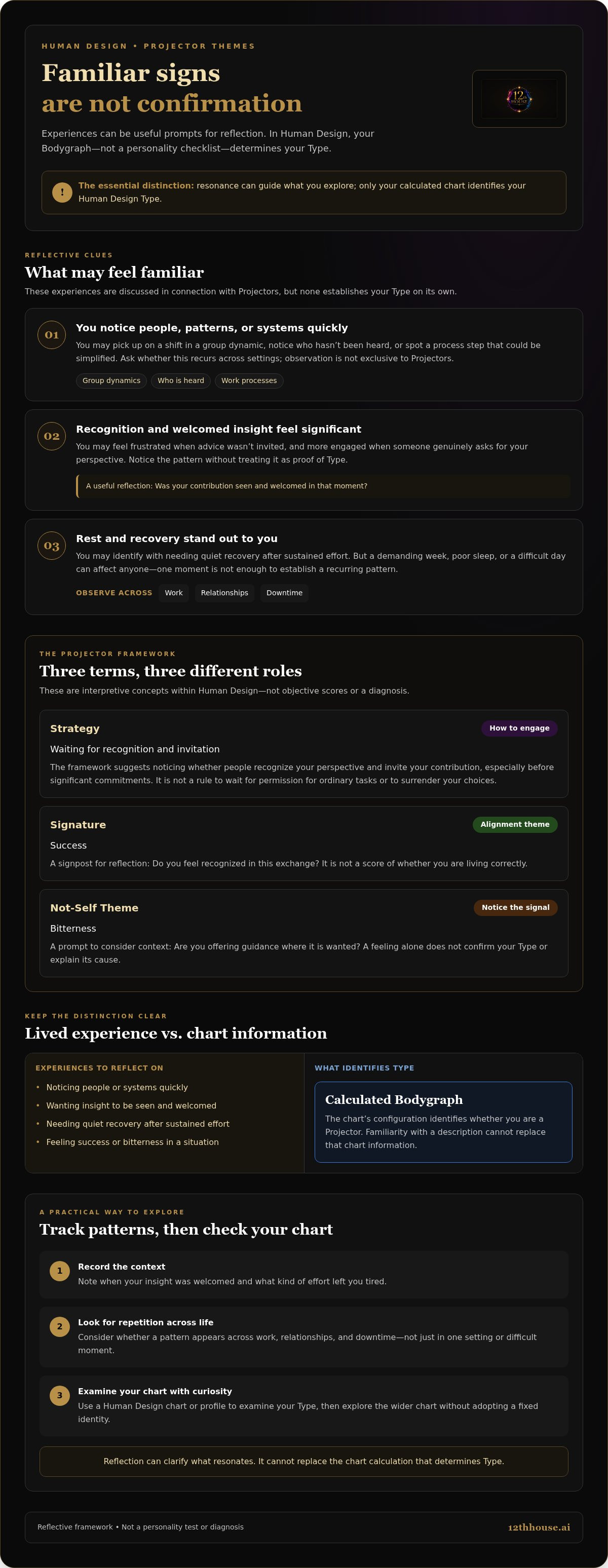
Do you often notice what others miss, feel depleted after trying to keep up, or want your insight to be recognized? These experiences may resemble themes associated with Projectors, but they aren’t a Type test. The phrase signs you're a projector human design points to reflective clues, not a conclusion you can reach from personality alone.
Human Design describes Projectors through a particular chart configuration and a way of engaging with people and energy. You can explore the broader Human Design system for context, but a calculated Bodygraph, not a checklist of traits, identifies your Type within the system. Treat familiar themes as questions to observe, not labels to claim.
Lived resonance can suggest what to explore; only your calculated chart can confirm your Human Design Type.
You notice people, patterns, or systems quickly
Focused attention is commonly discussed as a Projector theme. You might pick up on a shift in a group dynamic, notice who hasn’t been heard, or spot a step in a work process that could be simplified. These moments may feel like an instinct for reading people or systems, but observation isn’t exclusive to Projectors. Ask whether it’s a recurring experience across different settings, rather than a skill you use in just one area of life.
Recognition and rest feel especially significant
Within Human Design, Projectors are often described as wanting their insight or contribution to be seen and welcomed. You might recognize the frustration of offering advice that wasn’t invited, then feel more engaged when someone genuinely asks for your perspective. That pattern can be worth noticing, but it doesn’t establish your Type.
Energy management is personal, too. Some people identify with needing quiet recovery after sustained effort; others don’t experience rest in the same way. A demanding week, poor sleep, or a difficult day can affect anyone. Instead of treating one moment as evidence, track what repeats across work, relationships, and downtime.
For a grounded check, write down the context and what happened: when your insight was welcomed, what kind of effort left you tired, and whether the pattern appears in different parts of life. These notes can help you understand what resonates, but they can’t replace the chart calculation that determines your Type.
How Projector Strategy, Signature, and Not-Self Theme Fit Together
Human Design uses three terms to describe how a Type is understood and experienced. Strategy is the suggested way to engage with decisions and opportunities. A Signature is the positive theme associated with being in alignment with that Type. A Not-Self Theme is a signal to notice when your approach may feel out of step with the system’s framework. These concepts sit within a larger map of Human Design types, each with its own terminology.
For Projectors, Strategy is commonly described as waiting for recognition and invitation. The idea isn’t to stop acting or hand your choices to someone else. It’s to notice whether people recognize your perspective and invite your contribution, particularly before you make significant commitments.
What waiting for recognition and invitation means
In this framework, recognition means being seen for the qualities or insight you bring, rather than simply being present in a room. An invitation is a clear opening to participate, such as being asked to take on a role or share your perspective in an important relationship or career decision.
That’s different from waiting for permission to make lunch, reply to a message, or handle an ordinary task. Use practical judgment: consider the quality of the invitation, the people involved, and whether the commitment makes sense for you. Human Design’s language is a lens for reflection, not a rule that requires passivity or overrides real-world circumstances.
Why Success and Bitterness are interpretive signposts
Success is described as the Projector Signature, while Bitterness is the Projector Not-Self Theme. In the system, they can prompt questions: Do you feel recognized in this exchange? Are you offering guidance where it’s wanted? But a feeling alone doesn’t confirm your Type or explain its cause. A difficult relationship, stress, or an unmet expectation can shape how you feel, too.
Success and Bitterness are Human Design signposts for reflection, not objective scores of whether you’re living correctly. Look for recurring patterns and consider their context instead of treating one emotion as a verdict. If you want to explore the chart behind these concepts, a Human Design Profile offers a structured starting point for personal study.
Projector Traits or Broad Personality Patterns? Separate the Two
Being perceptive, selective about social plans, or tired after a demanding week can feel like a match for Projector descriptions. But these experiences aren’t unique to one Human Design Type. The signs you're a projector human design reader notices are personal clues to examine, not evidence that settles the question.
| Reflective clue | Chart-derived information |
|---|---|
| You relate to being observant or sensitive. | Your Type is identified from the configuration of a calculated Bodygraph. |
| You notice certain patterns in work or relationships. | The chart provides a framework beyond any single trait or experience. |
| You feel tired or want more solitude. | A personality checklist or quiz score cannot establish your Type. |
Why a personality checklist can create false positives
Many people can recognize themselves in broad descriptions. A manager may quickly spot tension in a meeting because of experience. A caregiver may feel depleted after a long day. Someone else may prefer fewer social commitments, without that preference indicating a particular chart Type.
Context matters. Stress, responsibilities, health, and personal temperament can all shape how you act or feel. A checklist can also encourage confirmation bias: you notice the traits that fit and overlook the ones that don’t. Use descriptions to generate questions, not to select an identity. Human Design interpretations shouldn’t replace your judgment about what you need or what works in your life.
What the Bodygraph adds beyond self-recognition
Within Human Design, Type is read from a calculated chart, not inferred from a personality quiz. The Bodygraph is a connected system, so Type shouldn’t be reduced to one center, a single life event, or whether one Projector description feels familiar. The chart’s configuration is the relevant evidence within the system; lived resonance may help you decide what to explore, but it doesn’t confirm the result.
For a wider comparison, read this guide to the five Human Design types. It’s a broader starting point for understanding how the types differ, not a substitute for examining your own chart. Keep the distinction clear: personality descriptions can invite reflection, while chart calculation identifies your Type in Human Design.
A Practical Checklist: How to Explore Whether Projector Themes Resonate
Use this process to observe patterns, not to diagnose yourself. The signs you're a projector human design can give you useful prompts, but no number of “yes” answers confirms a Type. Look for repeated experiences and the circumstances around them.
Use the signs as prompts, not a score
Across work, relationships, and rest, note what actually happens rather than trying to match a description. You might ask:
- Recognition: When do you feel that others understand the perspective or contribution you bring?
- Invitations: In significant decisions, are you being clearly asked to participate, or are you pushing to be heard?
- Energy patterns: What kinds of activities leave you restored, steady, or depleted? Notice context and repetition.
- Perceived success: What does feeling effective or valued mean to you in a specific situation?
Write a few lines after meaningful experiences. Include what happened, who was involved, and how you felt afterward. Avoid tallying your answers or comparing them with a threshold. A pattern that appears in one relationship or during a stressful period may not represent your experience across life.
Check the chart and interpret it in context
Once you’ve reflected, check a calculated Bodygraph rather than inferring Type from behavior. Use accurate birth information and follow the specific chart tool’s instructions. Requirements can vary, so confirm what that tool asks for instead of assuming. If a detail is uncertain, note that as you review the result.
Start with the chart’s Type, then explore Strategy and Authority as related but distinct parts of the framework. Don’t treat one familiar concept as proof of another. As you learn the terminology, keep your interpretations flexible. A chart can give you a structured map to study, while your observations help you consider how its language relates to your life.
Repeated resonance can guide your inquiry, but it can’t confirm your Type; the calculated chart provides that answer within Human Design. For a structured way to explore chart details, explore a Human Design Profile and use it as a learning resource, not a substitute for your own judgment.
What to Do If You Identify With Projector Signs
If several Projector themes feel familiar, let that recognition open a question rather than close one. The signs you're a projector human design may suggest what you want to examine, but they can’t establish your Type. In Human Design, that comes from the calculated chart. Keep the distinction clear: lived experience can guide reflection; chart context identifies your Type within the system.
Explore your chart without reducing yourself to a type
Use Projector language as a framework for noticing patterns, not a fixed identity. A chart label doesn’t determine your worth, ability, or future. It also can’t make major decisions for you. A Projector description shouldn’t dictate which career to choose, whom to date, or how to manage your health. Consider the ideas, compare them with your actual circumstances, and retain what helps you think more clearly.
As you review your Bodygraph, explore how Type relates to other chart elements rather than treating one label as the whole map. Human Design can offer a vocabulary for self-inquiry, but your judgment and the realities of your life still matter. You’re allowed to question an interpretation, revisit it, or decide that a description doesn’t fit.
Use personalized tools for follow-up questions
A Human Design Profile from 12th House is an optional way to explore personal chart information in a structured format. As you read, note questions about how the chart identifies Type and how Projector themes relate to other elements. Treat any interpretation as material for further reflection, not a definitive verdict about who you are.
You can also use Lala AI to ask personalized follow-up questions about your chart. It’s an AI spiritual guidance tool, not a human consultation or an authority that can settle your Type. Keep your chart as the reference point, and use your questions to clarify terminology or consider different interpretations.
The most grounded next step is simple: confirm the chart result, learn how its parts connect, and stay curious about what resonates in practice. To continue exploring, Explore Human Design tools with 12th House.
Let Your Chart Guide the Next Question
The signs you're a projector human design may help you notice which themes feel familiar, from how you respond to recognition to how you manage your energy. But resonance is a starting point, not confirmation. A calculated Bodygraph identifies your Type within Human Design, while Strategy and Authority add context to how the chart is interpreted.
Keep the exploration open. A Projector label doesn’t define your abilities, choices, or future, and no checklist can capture the full pattern of your experience. Let the chart offer a framework for reflection, then bring your own judgment to what you learn.
For a structured way to explore personal chart information, 12th House offers Human Design Profiles. Lala AI can also support personalized questions about metaphysical topics, as an optional learning tool rather than a definitive authority.
Explore your Human Design chart with 12th House, and continue with curiosity. Your chart can be a map for inquiry, not a box you have to fit inside.
Frequently Asked Questions
What are the most common signs you’re a Projector in Human Design?
Commonly described Projector themes include noticing people or systems quickly, valuing recognition for your insight, and being thoughtful about how you use your energy. Some Projector descriptions also connect feeling recognized with success and feeling overlooked with bitterness. These are reflective themes, not traits every Projector must share. They can help you explore the system, but they don’t establish your Type. A calculated Bodygraph is the way to check it within Human Design.
How do I know if I’m a Projector in Human Design?
Check a Human Design chart calculated from accurate birth information. In the system, Type is determined by the Bodygraph’s configuration, not by a quiz result or by how many Projector descriptions feel familiar. If you use a chart tool, follow its instructions and verify the information it requests. Once you have the result, explore Type alongside other chart elements, such as Strategy and Authority, rather than interpreting a single detail in isolation.
Can you tell if someone is a Projector from their personality?
No. Personality traits such as being perceptive, sensitive, introverted, or good at spotting patterns don’t independently identify someone as a Projector. People of different Human Design Types can share those qualities, and circumstances can shape how someone behaves. The phrase signs you’re a projector human design refers to possible themes for reflection, not a reliable personality test. Use traits to form questions, then consult a calculated Bodygraph to check Type.
Is being tired or needing more rest a sign you’re a Projector?
Needing rest can resonate with some Projector descriptions, but tiredness alone doesn’t indicate a Human Design Type. Sleep, stress, workload, health, and personal circumstances can all affect energy. Notice whether particular activities or environments repeatedly influence how you feel, rather than drawing a conclusion from one difficult day. If tiredness is persistent or concerning, consider it as a personal wellbeing issue and seek appropriate support, not as proof of a chart Type.
What does bitterness mean for a Projector in Human Design?
Bitterness is described in Human Design as the Projector Not-Self Theme, a prompt to reflect on whether an interaction feels recognized or welcomed within the system’s framework. It isn’t a diagnosis, a moral failing, or proof that someone is a Projector. Frustration can have many causes, including relationship dynamics, stress, or unmet expectations. Consider what happened and how often the feeling occurs, while keeping the chart and real-life context in view.
Do Projectors have to wait for an invitation for everything?
No. Projector Strategy is commonly described as waiting for recognition and invitation, especially around significant areas such as career or relationships. It doesn’t mean waiting for permission to handle routine tasks, make everyday choices, or respond to a message. Nor does it require you to ignore practical judgment. Consider whether an important opportunity includes genuine recognition, and assess its details, risks, and fit before deciding how to respond.
Can your Human Design type change over time?
Within Human Design, Type is based on the chart calculated from birth information, so it isn’t described as changing with personality, age, or life experience. If two charts show different Types, check whether the birth details entered were accurate and whether the tools used calculated the chart consistently. Your understanding of the chart may develop, and your experiences may shift, but those changes aren’t themselves evidence that your Type has changed.


