
Spiritual practice can become a way to avoid the very feelings it’s meant to help you face. Spiritual bypassing means using spiritual ideas or practices to sidestep unresolved emotional pain, psychological wounds, or difficult personal growth. Spiritual bypassing signs and symptoms can include forced positivity, rushing forgiveness, or treating anger and grief as signs of spiritual failure.
If you’ve felt uneasy when someone urges you to “just let go,” or wondered whether your own spiritual habits are helping you process pain or helping you avoid it, that tension matters. Spiritual bypassing isn’t a rejection of spirituality; it’s a way spiritual language can cover what still needs attention. Psychologist John Welwood coined the term “spiritual bypass” in 1984.
Here, you’ll learn what the concept means, where it came from, and how spiritual pride and bypass culture can shape personal practice and community life. We’ll explore these patterns without turning ordinary emotions into a diagnosis, so you can distinguish meaningful spiritual growth from pressure to deny what you feel.
Key Takeaways
- Notice when spiritual language is used to rush forgiveness, silence grief, or avoid a difficult conversation.
- Distinguish genuine acceptance from pressure to appear positive when something still needs to be felt or addressed.
- Recognize how spiritual pride can reduce self-examination and make personal blind spots harder to see.
- Look for patterns in a community’s response to anger, boundaries, and emotional honesty, not just its stated ideals.
What Is Spiritual Bypass?
Spiritual bypassing means using spiritual ideas or practices to avoid unresolved emotional pain, psychological wounds, or difficult personal growth. The difference lies in whether a practice helps you face emotions or makes you feel you must suppress them.
Pressure to Appear Emotionally Evolved
Wellness culture can pressure people to perform calmness, forgiveness, and constant gratitude as proof of spiritual progress. That performance can make honest emotions feel like personal failure. For example, someone may hear “choose compassion” after describing mistreatment and feel responsible for hiding anger instead of addressing the harm. Emotional maturity doesn’t require appearing untouched by pain.
Meditation as Emotional Detachment
Meditation becomes bypassing when you use it to disconnect from painful emotions or other people instead of noticing your experience with care. Healthy spiritual coping can include meditation while still making room for grief, fear, or a needed conversation. Consider what follows: does the practice support presence and connection, or repeatedly help someone withdraw from unresolved feelings? If meditation leaves you numb or distant, notice the pattern rather than assuming it means you’re healing.
Avoidance of Discomfort and Negative Emotions
Spiritual bypassing can involve pushing away anger, sadness, or fear through quick forgiveness, forced positivity, or an immediate search for a silver lining. This avoidance may leave real problems unaddressed and strain relationships; suppressed emotions can also resurface as anxiety, depression, or physical symptoms. For a woman in recovery, pressure to stay grateful may make it harder to speak openly about a painful experience. Difficulty regulating emotions, including becoming overwhelmed or shutting down, can be trauma-related, but it isn’t a diagnosis by itself. Seek therapy when distress disrupts daily life or emotions feel unmanageable. A trauma-informed therapist can help identify responses and process them without judgment or pressure to move on.
Definition and origins of spiritual bypassing
To understand the concept, distinguish spiritual practice from how someone uses it. The key question is whether spirituality supports emotional processing or replaces it.
The Meaning of Spiritual Bypassing
Psychologist John Welwood used “spiritual bypassing” to describe using spiritual ideas to avoid unresolved emotional issues, psychological wounds, or unfinished developmental tasks. The practice itself isn’t the problem. Avoidance begins when spiritual explanations prevent someone from recognizing distress or addressing its causes.
Consider someone who interprets every painful reaction as an ego problem. That belief may block curiosity about trauma, a boundary violation, or a relationship pattern. Spiritual language can offer meaning, but meaning alone doesn’t process an experience. Integration means asking what happened, what emotions remain, and what response is needed now.
This distinction connects spiritual growth to everyday life. Meditation, prayer, or a belief in compassion can support reflection. They become bypassing when they consistently steer someone away from discomfort, accountability, or repair. The question isn’t whether a practice feels peaceful, but whether it helps someone engage honestly with unresolved experiences.
Origins of the Concept
John Welwood coined the term “spiritual bypass” in 1984. As a psychologist and Buddhist teacher, he described a pattern where spiritual insight could be used to sidestep psychological work. Naming the pattern gave readers a way to examine how spiritual ideals interact with emotional development.
Interest in spirituality, especially Eastern spirituality, and immersion in spiritual bypassing have grown since the mid-1960s, according to writer Robert Augustus Masters. This history places the term within a wider wellness context, where spiritual practices may meet psychological needs but can’t automatically resolve them.
The concept remains useful because it doesn’t ask people to abandon spirituality. It asks them to notice when a belief becomes a shield. For example, “everything happens for a reason” may offer comfort, but it can also shut down grief before someone has processed a loss. Holding space for both meaning and discomfort allows spiritual reflection to support, rather than replace, emotional work.
Spiritual pride and reduced self-examination
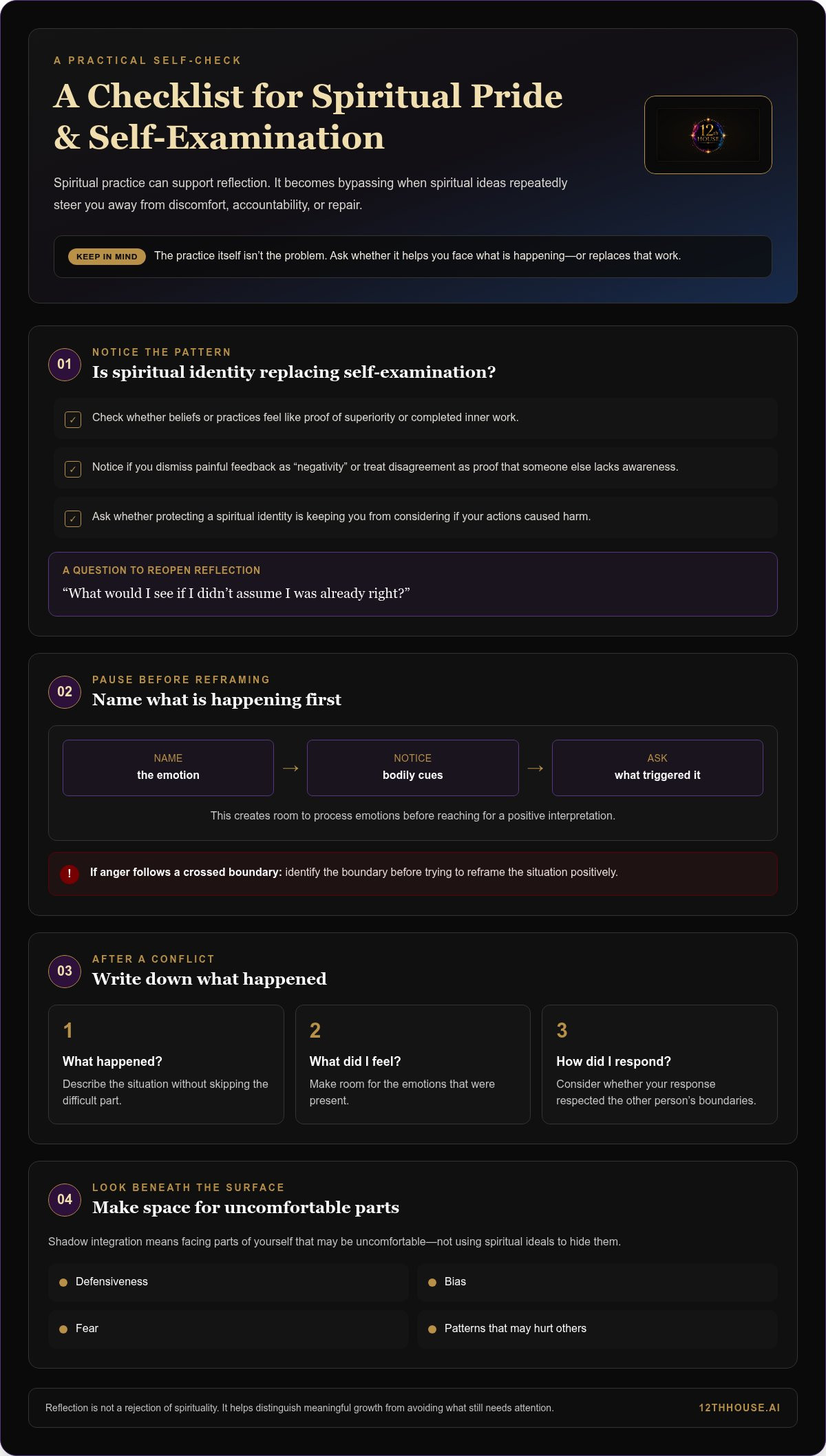
Spiritual pride appears when someone treats their beliefs or practices as proof of superiority or completed inner work. For example, a person may call themselves “high vibration” while dismissing a friend’s painful feedback as negativity. This protects a spiritual identity from examination instead of prompting the person to ask whether their actions caused harm.
To interrupt bypassing, name the emotion, notice its bodily cues, and ask what triggered it. If anger follows a crossed boundary, identify the boundary before reaching for a positive interpretation. This simple sequence creates room to process emotions and distinguish genuine compassion from pressure to appear unaffected.
A spiritual identity can become a shield when someone frames every disagreement as evidence of another person’s lack of awareness. Psychologist John Welwood’s concept helps readers examine this pattern without rejecting spiritual practice. Ask: “What would I see if I didn’t assume I was already right?” A specific question can prompt deeper self-reflection.
Awareness grows through examples, not claims of enlightenment. After a conflict, write down what happened, what you felt, and how you responded. Then consider whether your response respected the other person’s boundaries. Shadow integration means facing uncomfortable parts of yourself, including defensiveness, bias, fear, and patterns that may hurt others.
Notice how you respond to feedback. Do you become curious, or immediately explain why the other person is spiritually mistaken? That reaction can reveal where self-examination stops. An informed therapist can help explore emotional patterns and trauma responses without treating spiritual beliefs as the problem. Therapy may be useful when these patterns repeatedly disrupt relationships or daily life.
Spiritual growth doesn’t require abandoning ritual or belief. It calls for accountability alongside meaning. For instance, after using meditation to steady yourself, return to the unresolved conversation and listen without preparing a defense. Moving toward repair shows whether a practice supports engagement or simply helps you avoid discomfort.
Signs of spiritual bypass culture
Spiritual bypass culture appears when a group rewards spiritual language while discouraging honest emotional expression. Psychologist Robert Augustus Masters describes patterns such as emotional numbing, repression, overemphasis on positivity, fear of anger, and weak or overly porous boundaries.
Notice how people respond when someone shares discomfort. If a grieving member hears “focus on the lesson” before anyone acknowledges the loss, the group may be privileging meaning over presence. Similarly, labeling anger as spiritually immature can make members feel guilty for an emotion that may signal hurt, injustice, or a crossed boundary.
You can recognize bypassing in yourself by noticing repeated gaps between what you feel and what you allow yourself to express. For example, ask whether gratitude helps you see support or pushes you to dismiss a problem that needs action. Notice whether spiritual advice leaves you feeling understood or smaller and more alone.
Other clues appear in the body and in relationships. Someone who can’t identify bodily sensations may be experiencing disconnection rather than enlightenment. In a recovery space, pressure to adopt spiritual beliefs can also silence people who need emotional work and choice. Supportive recovery makes room for honest feelings and treats spiritual connection as personal, not compulsory.
After a difficult interaction, track the pattern: write down the advice you received, the emotion it brought up, and whether you felt safe enough to speak. If a community repeatedly punishes vulnerability or rewards porous boundaries, its culture deserves scrutiny. A healthy practice can help someone stay present with discomfort rather than demand instant peace.
Use a guided spiritual reflection to examine the beliefs shaping your response, then consider what an honest next step looks like. Reflection can clarify a pattern, while relationship repair and appropriate emotional support address what the pattern affects.
12Th House: Ask Lala AI Spiritual Guidance
12th House offers Ask Lala AI Spiritual Guidance for exploring spiritual questions and reflecting on personal patterns. Use it to examine how a belief or chart interpretation shapes your perspective, while staying attentive to your emotions and lived experience. Astrology Birth Chart & Transit Analysis can also offer a symbolic framework for self-inquiry.
These tools support reflection, not trauma treatment or a substitute for therapy. If painful emotions feel overwhelming or disrupt daily life, work with a qualified mental health professional. Spiritual insight is most useful when it deepens honest awareness instead of dismissing what needs care.
Visit 12th House to explore Ask Lala AI Spiritual Guidance.
Let Insight Become Honest Action
Recognizing spiritual bypassing signs and symptoms is a starting point, not a verdict on your character or beliefs. Next, notice what a practice helps you approach and what it repeatedly helps you avoid. Let that distinction guide your choices. You can keep the rituals and ideas that deepen awareness while making room for emotional work, honest boundaries, and repair.
Reflection can also benefit from a structured prompt. 12th House offers Ask Lala AI Spiritual Guidance, Astrology Birth Chart & Transit Analysis, and Tarot Readings as tools for personal inquiry. Use symbolic insight to generate questions, not to dismiss feelings or replace support that addresses emotional distress.
If you’re ready to explore a spiritual question with greater clarity, contact 12th House to explore support. Move at a pace that lets insight meet lived experience. Your path can hold meaning and difficult emotions at once.
Frequently Asked Questions
What’s the problem?
The problem is that spiritual explanations can obscure needs that require emotional attention or practical action. Someone might interpret ongoing tension with a partner as a lesson in patience while avoiding a clear conversation about shared responsibilities. Over time, that gap can make conflict harder to resolve and self-understanding less precise. Spiritual ideas help most when they illuminate experience rather than replace engagement with it.
What is spiritual bypassing?
Spiritual bypassing means using spiritual beliefs or practices to sidestep unresolved emotional pain, psychological wounds, or personal growth. For example, a person might interpret a painful memory only as a lesson without exploring how it affects their choices today. The defining feature isn’t the practice or belief itself. It’s whether that framework consistently redirects attention from feelings, responsibility, or changes everyday life calls for.
What are common signs and symptoms of spiritual bypassing?
To assess spiritual bypassing signs and symptoms, look for a repeated mismatch between spiritual ideals and everyday behavior. Someone may speak often about compassion but struggle to acknowledge the impact of their words, or describe themselves as healed while avoiding a recurring conflict. Notice whether spiritual advice narrows your options, makes you distrust your perceptions, or discourages practical steps such as setting a boundary or apologizing.
What are examples of spiritual bypassing in everyday life?
A person may call a missed deadline “divine timing” instead of reviewing their planning habits. Someone else might attribute a friend’s repeated disrespect to karma, then avoid stating what behavior needs to change. A group leader may use “we’re all one” to shut down disagreement. In each case, spiritual language becomes a reason not to examine a concrete situation or respond to its effects.
What causes people to engage in spiritual bypassing?
People may turn to spiritual explanations because pain, uncertainty, or conflict feels difficult to face directly. Recognizing spiritual bypassing signs and symptoms can start with noticing when a comforting belief replaces curiosity about what happened. A spiritual framework may offer order when emotions feel unpredictable, while a wellness environment may reward calmness and discourage distress. Repeated avoidance can become habitual, making practical responses harder to see.


