

More direction isn’t always the answer. In Human Design, a Projector child is described as a natural guide who may notice what others miss, with a strategy of waiting for an invitation before offering insight. Learning how to parent a Projector child means balancing recognition and room to rest with clear, steady boundaries.
If your child seems observant, sensitive to their surroundings, or eager to share what they notice, you may want to support their insight without making them feel they must stay quiet. Human Design offers a framework for considering these patterns, not a reason to reduce your child to a type.
Here, you’ll learn what the Projector energy type means and how recognition, invitations, communication, and discipline can inform your parenting. We’ll look at ways to acknowledge your child’s contributions, set limits without overexplaining, and make space for downtime and curiosity. The aim is a more thoughtful way to meet your child as they are.
Key Takeaways
- Understand how the Projector type is described in Human Design, and use it as a lens rather than a fixed label for your child.
- Recognize your child’s observations and contributions with specific appreciation, while helping them learn when an invitation is welcome.
- Set calm, clear boundaries without turning every limit into a lengthy explanation or an attempt to persuade.
- Make room for rest, curiosity, and choice so your child can explore their interests without being pushed into an overly demanding pace.
How children of different Human Design types may respond
Human Design names four Types: Generator, Projector, Manifestor, and Reflector. It offers a symbolic map for considering how children engage, make decisions, and respond to demands.
Human Design Types and Parenting Approaches
Human Design parenting connects a child’s Type with a suggested way of engaging, not a fixed rulebook. A Generator may respond well to noticing their gut response; a Manifestor may value room to initiate; a Reflector may benefit from time to process. Treat these patterns as useful questions, compare them with your child’s actual responses, and adjust your approach based on what you observe.
Parent and Child Design Dynamics
A parent’s Design describes their own tendencies within the same framework, which may shape family pace and expectations. Compare your defaults with your child’s: a fast-moving parent could pause before interrupting a child absorbed in a task. A parent who prefers close direction could offer a choice instead. Human Design profiles can help you map these differences; use the map to notice friction, not assign blame.
Projector Children’s Traits and Needs
Projector children are described as natural guides who notice details others miss. They may observe before acting and tire more easily, since their energy isn’t consistently sustainable. Projectors make up 20% of the population in Human Design. Recognition matters: acknowledge a specific observation, then invite the child to share more. A child with a 3rd Line Profile may learn through trial and error, so treat a failed attempt as information.
A common risk is treating a Type as a diagnosis or explaining every refusal through a chart. Keep the context in view: a child may resist because they’re tired after a busy day, not because their Design predicts it.
A developmental approach focuses on observable temperament and context rather than relying on a Human Design label alone. For example, notice whether your child needs quiet after a group activity, then adjust the routine and observe how they respond.
Projector children’s need for recognition and invitations
In Human Design, recognition means showing a Projector child that you’ve noticed a specific insight or contribution. A clear response such as, “You saw that your friend felt left out,” recognizes their observation without turning praise into a demand for more. This kind of attention helps your child feel seen for their perspective, not only for achievements or compliance.
Look for strengths in ordinary moments. If your child spots a pattern in a story, tell them what you admire about their careful thinking. If they help solve a family problem, name their contribution: “Your idea helped us find the missing keys.” Specific words make strengths visible and give your child practical language for describing their own abilities.
In this framework, Projectors are encouraged to wait for invitations before offering insights or opinions. Practise that skill without teaching your child to silence themselves. You might say, “That’s an interesting thought. Would you like to share it with Grandma?” For major decisions or life changes, explain that an invitation means being welcomed into the conversation, not waiting passively for permission to exist.
One-on-one time can make recognition tangible. Set aside a quiet moment to hear your child describe a drawing, a question, or a friendship concern. A Generator sibling may enjoy a shared activity, while a Reflector may need time to talk; notice each child’s response rather than measuring attention equally by minutes. The aim is attentive connection, not comparison.
If you’re a Projector parent, seek recognition and emotional support from other adults instead of asking your child to meet those needs. Your child can receive your attention without becoming responsible for returning it. If bitterness or resentment surfaces, invite an honest conversation about feeling overlooked. To explore the family’s Human Design patterns, reflect on your child’s Design as one lens, alongside what you observe in daily life.
Discipline and communication
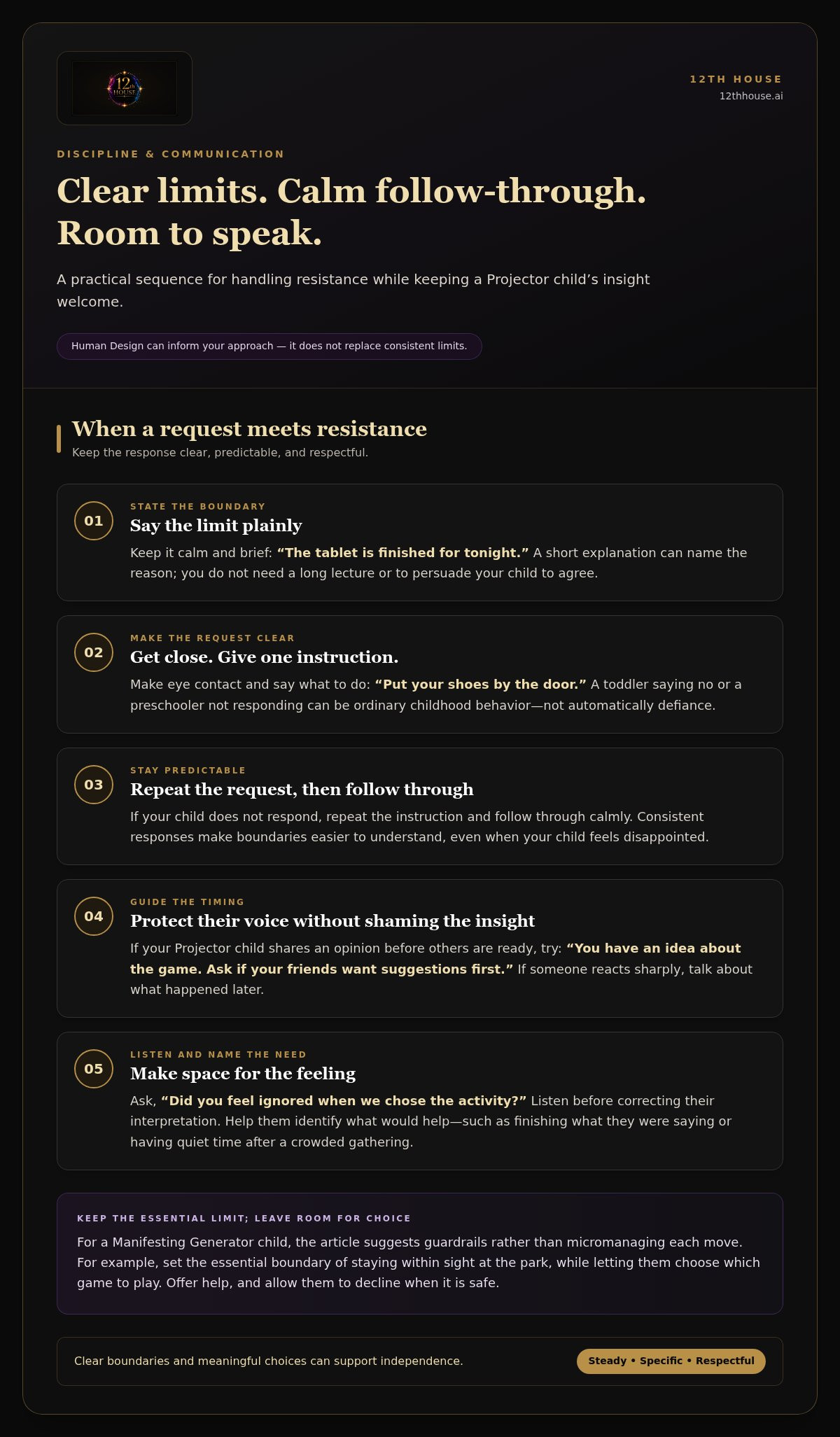
Human Design can inform your approach, but it doesn’t replace consistent limits. State the boundary plainly: “The tablet is finished for tonight.” You don’t need a long lecture or to persuade your child to agree. A calm, brief explanation can name the reason, then keep the limit steady. This gives your child a clear next step, even when they feel disappointed.
Expect resistance without treating every refusal as defiance. A toddler saying no or a preschooler ignoring a request can be ordinary childhood behavior. Get close, make eye contact, and give one clear instruction: “Put your shoes by the door.” If your child doesn’t respond, repeat the request and follow through calmly. Predictable responses make boundaries easier to understand.
Projector children may offer opinions before others are ready to hear them. Help them notice timing without shaming their insight. You could say, “You have an idea about the game. Ask if your friends want suggestions first.” This teaches consideration while preserving their voice. If someone reacts sharply, talk later about what happened and how your child felt.
Make room to talk about difficult feelings. If your child seems bitter after being overlooked, ask, “Did you feel ignored when we chose the activity?” Listen before correcting their interpretation. Help them identify what they need, such as a chance to finish speaking or time alone after a crowded gathering. Naming the experience helps them express themselves directly.
For a Manifesting Generator child, use guardrails instead of micromanaging each move. Set the essential limit, such as staying within sight at the park, while letting them choose which game to play. Offer help, then allow them to decline when it’s safe. Clear boundaries and meaningful choices let a child practise independence without turning every decision into a contest.
Parenting Projector children
Learning how to parent a Projector child starts with observing what happens before and after demanding parts of the day. Does your child become quieter after a crowded classroom, or lose focus after several activities? Track those patterns in a simple weekly note. Use what you notice to adjust the rhythm instead of assuming every child responds to the same schedule.
To support their energy and reduce burnout, leave room for downtime after social events and busy days. The Human Design framework describes Projectors as having less consistent access to sustainable energy. Avoid stacking intense activities without recovery time. A calm bedtime routine, with dimmed lights and stimulating play finished earlier, can help your child transition toward rest.
Knowing how to parent a Projector child also means using structure without turning every task into a test of compliance. State the expectation, then offer a manageable choice: “Homework needs to be done before dinner. Would you like to start with reading or math?” If your child struggles, break the task into smaller parts and notice whether fatigue, confusion, or distraction is getting in the way.
For school and extracurricular activities, review the week together. Ask which activity feels engaging and which leaves your child depleted. A child who enjoys art club may still need quiet time after school before attending. Keep essential commitments clear, but make space to reconsider an overloaded routine. Their response to a schedule is useful information, not a verdict on their character.
Support curiosity without turning each interest into a performance goal. If your child becomes fascinated by astronomy, offer time to explore books or observe the sky. Let them decide when they want to share what they’ve discovered. This gives their insight room to develop without requiring constant output.
Use Human Design as a prompt for reflection, then compare its ideas with your child’s lived experience. Explore a Human Design profile to consider how the chart may inform your parenting approach.
12Th House: Ask Lala AI Spiritual Guidance
12th House offers Ask Lala AI Spiritual Guidance for exploring questions about your child’s Human Design and family patterns. If you’re unsure how a chart’s themes relate to a specific parenting moment, Lala can answer personalized questions about charts, spells, and compatibility. Human Design Profiles offer another way to explore the framework behind your child’s Type and consider it alongside your everyday observations.
Use Human Design tools to reflect on patterns, such as why your child needs quiet after a busy day or how different Designs in your family interact. Treat them as a starting point for inquiry, not a substitute for noticing your child’s individual needs.
Visit 12thhouse.ai to explore Ask Lala AI Spiritual Guidance.
Keep Learning From Your Child
The question of how to parent a Projector child doesn’t need one permanent answer. Let your approach evolve as your child grows. Choose one moment this week to observe: when do they become absorbed, and when do they seem ready to step back? Use what you notice to make a small adjustment, such as a quieter transition after school or more room to finish explaining an idea.
Human Design can offer a language for reflection, but your child’s lived experience remains the clearest guide. Keep noticing, listening, and revising. A thoughtful change doesn’t need to transform the whole family routine; it can begin with one more attentive conversation.
If you’d like support exploring the questions that come up for your family, connect with 12th House. Keep making space for your child to be known, and for your understanding to deepen with them.
Frequently Asked Questions
What’s the Projector Energy Type?
Projector is a Human Design energy type associated with guiding and directing attention. The framework describes Projectors as having a different relationship with sustained energy than types built for steady output. In family life, this can prompt you to notice which tasks engage your child and which drain them. For example, they may enjoy planning a group project more than doing every repetitive step.
What is a projector child in Human Design?
A Projector child is a child whose Human Design chart identifies their Type as Projector. The label belongs to a symbolic system, not a medical or developmental diagnosis. Use it as one perspective among several. If your child prefers to watch a new game before joining, notice that behavior directly rather than assuming every hesitation comes from their Type. Their interests, age, and circumstances still matter.
How should parents invite a Projector child to share ideas or make decisions?
Offer a genuine opening, then make room for either answer. Try, “I’m choosing a weekend activity. Would you like to tell me what you think?” For a personal choice, ask whether they want to talk now or later. An invitation should create access, not pressure. If the decision affects the whole family, explain what must be decided and which parts your child can influence.
How can parents support a Projector child’s confidence and recognition?
Help your child build an evidence-based picture of their strengths. Keep a small record of moments they felt proud, such as solving a puzzle or noticing a classmate needed help. Revisit it when they doubt themselves, and ask what they learned about their abilities. This shifts confidence away from constant approval and toward recognizing their own skills and choices.
How should parents communicate with a Projector child during conflict?
Separate your child’s action from their identity, then focus on repair. After a sibling argument, say, “You grabbed the book, and your brother got upset. What could help make this right?” Hear their account before deciding on a consequence. If emotions are still high, pause the conversation and return to it once everyone can listen. Keep the limit clear while treating your child with respect.


